AI Chatbot That Turned Browsers Into Applicants
An AI-powered chatbot transformed a high-dropoff university website into a guided, conversion-focused experience, helping prospective students find the right programs faster and move toward enrollment with confidence.
Instead of searching, users were guided. Instead of bouncing, they converted.
Conversion Lift
+30%
Application starts
Bounce Reduction
-55%
Drop-off on key pages
Engagement
+40%
Average session duration
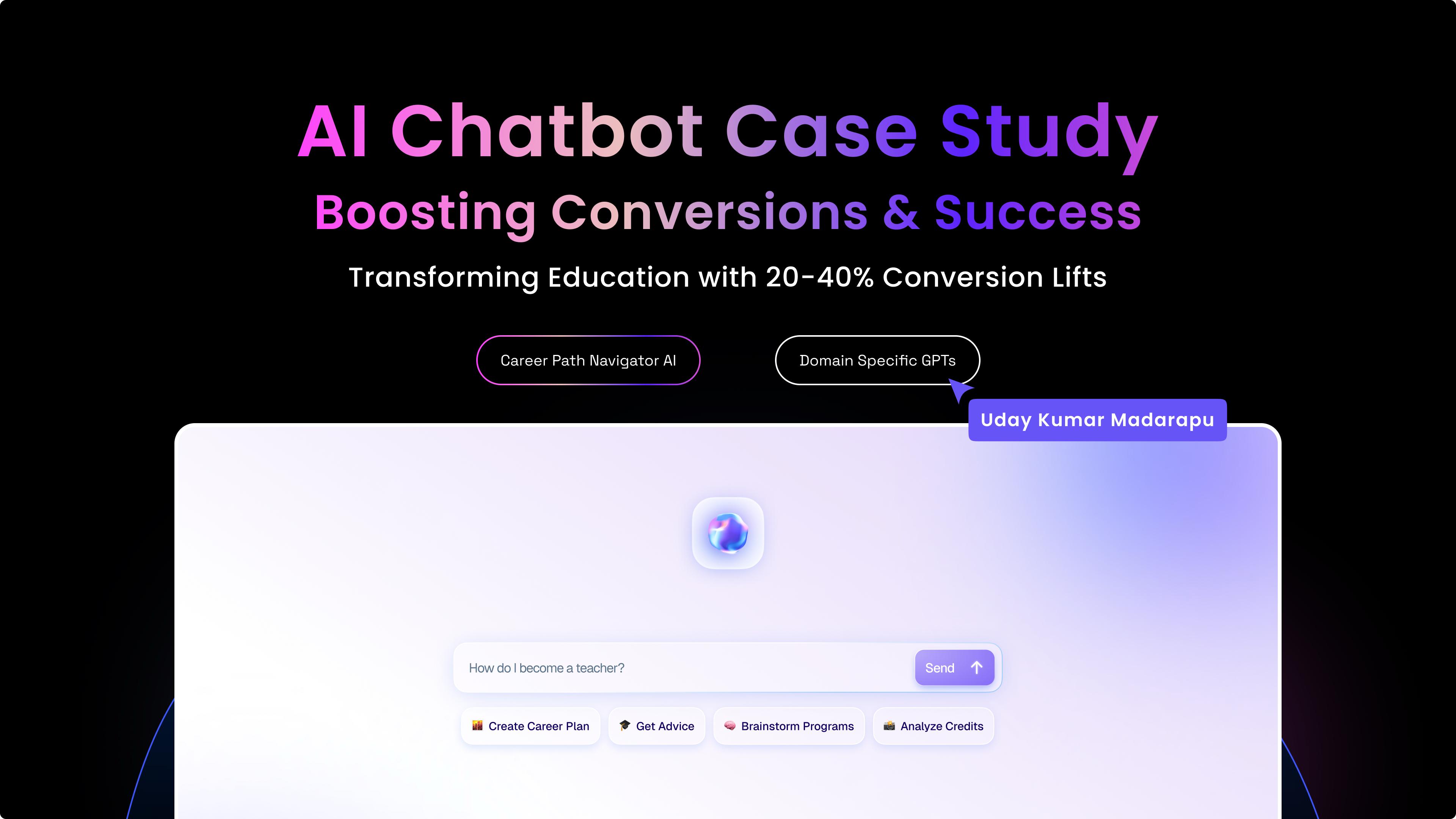
Career-Path Navigator AI Chatbot
Education / EdTech
Challenge
Prospective students struggled with a fragmented enrollment journey, scattered content, and overwhelming program options, contributing to high bounce rates (up to 55%) and low application starts. Complex prerequisites, slow advisor responses, and unclear guidance increased abandonment and counselor workload. There was a wealth of information but no intelligent, personalized layer to guide students through decisions and conversions.
Results
Personalization reduced decision paralysis and helped guide users from curiosity to action.
Simplified enrollment paths improved user confidence, supporting higher application engagement.
Organic content growth from chatbot logs strengthened SEO presence and user discovery.
Automated responses shifted routine queries away from human advisors, allowing staff to focus on high-value interactions.
Positioned the institution as an innovation leader in AI-enhanced student experience.
Process
The core problem wasn’t lack of content; it was lack of guidance.
Key decisions:
Chose conversational AI over static FAQs to reduce cognitive overload
Designed the chatbot to ask clarifying questions, not dump information
Prioritized career-path discovery instead of program listings
Used chatbot interactions to surface real user intent, not assumptions
The chatbot acted as a digital admissions advisor, routing users based on goals, background, and readiness, while integrating seamlessly into the existing website flow.
What Failed
Early chatbot scripts were too generic and felt robotic
Assumed users would trust AI immediately some needed reassurance and clarity
Initial intents missed edge cases, leading to dead-end conversations
What I’d do differently:
Introduce progressive disclosure earlier
Add clearer “handoff to human” signals
Validate intents with live user testing sooner
These failures directly improved the second iteration.
What's Next
Deeper personalization using behavioral and historical data
Predictive prompts based on user hesitation patterns
Multilingual support to expand accessibility
Measuring long-term retention, not just conversion
Open Questions:
How far can AI go in replacing, or augmenting human guidance without losing trust?